

 Product Category
 ZenMarketについて
 海外配送
海外配送 Campaign Information
 official app
 0120-354-038




2026.01.19 column
Which is recommended, honey or oligosaccharides? An explanation of the differences.
In recent years, with the growing health consciousness, sweeteners such as honey and oligosaccharides are gaining attention as alternatives to sugar. However, there may be some who are considering incorporating them into their lives but are unsure about which one to choose.
Honey and oligosaccharides differ in their nutritional components, health benefits, and raw materials. By deeply understanding each of their characteristics, it can provide hints for a more fulfilling diet.
What is oligosaccharide?
Oligosaccharides are a type of carbohydrate formed by the linkage of about 2 to 10 units of monosaccharides, which are the smallest units of carbohydrates, and they are also referred to as 'small sugars'.
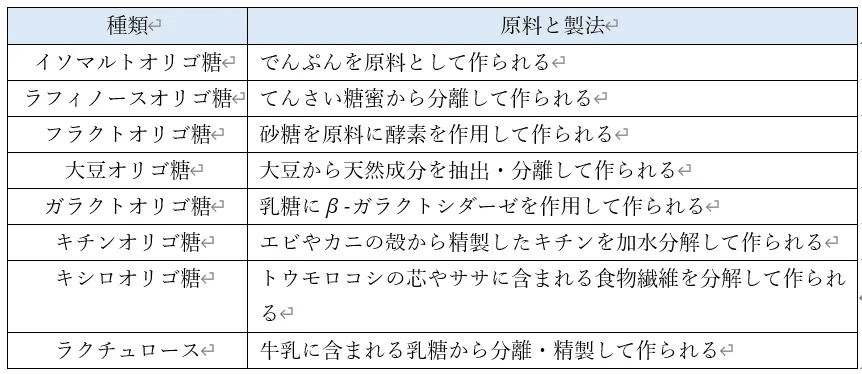
That type can be categorized as follows, based on the raw materials and manufacturing methods.
Types and Raw Materials of Oligosaccharides
The function of oligosaccharides.
Oligosaccharides serve as food for beneficial bacteria such as bifidobacteria and lactic acid bacteria, supporting a refreshing daily life.
Unlike regular sugar, it is characterized by being hardly broken down by human digestive enzymes such as saliva and gastric juice.
It is said that they are not easily converted into energy in the body as carbohydrates because they are not digested or absorbed.
Does honey also contain oligosaccharides?
Oligosaccharides, which have beneficial effects on the body, are actually also found in honey.
The following explains the characteristics of two types of oligosaccharides found in honey: 'isomalt oligosaccharides' and 'raffinose oligosaccharides'.
Characteristics of isomalt oligosaccharides.
Isomaltotriose, also known as isomaltose oligosaccharide, is an oligosaccharide characterized by its mellow sweetness.
In addition to honey, it is also found in condiments such as miso, soy sauce, and mirin.
This is one of the oligosaccharides that has been certified as a Food for Specified Health Uses (Tokubetsu Hōshin Yō Shokuhin) by the Consumer Affairs Agency, and it is expected to have a high effect on health maintenance.
Source: Consumer Affairs Agency "About Specific Health Foods"
Characteristics of Raffinose Oligosaccharides.
Raffinose oligosaccharides are components that are abundantly found in sugar beets, which are known as one of the two main raw materials for sugar.
Among oligosaccharides, it is said that the effect of refreshing the body is the most promising.
Due to these effects, this oligosaccharide is recognized as a food for specified health use, similar to isomalt oligosaccharides.
In addition, due to its light texture and high moisturizing effect, it is also used in cosmetics.
Which is recommended, honey or oligosaccharides?
Oligosaccharides, which are expected to have a refreshing effect on the body, are also found in honey, leading many to wonder, "Which one should I consume for maintaining health?"
In conclusion, both are recommended as sugar substitutes.
However, since each has its own characteristics, it is important to use them according to your purpose if you want to experience the health benefits more fully.
The difference between honey and oligosaccharides.
What are the specific differences between honey and oligosaccharides, which are attracting attention as alternatives to sugar?
By knowing the following seven differences, you will understand how to differentiate their usage.
The difference between honey and oligosaccharides.
- Raw material
- - Flavor - Sweetness
- Energy
- Nutritional components and health components.
- Approach to energy replenishment
- Approach to beauty
raw material
Honey is a natural sweetener made from the nectar of flowers collected by bees, as its name suggests.
Honey is produced by collecting honey from beehives and using a centrifuge to remove impurities.
On the other hand, oligosaccharides are artificially produced by processing and refining various food-derived materials such as starch, sugar beets, and soybeans.
Flavor and sweetness
So, what kind of differences are there in flavor and sweetness?
Honey is characterized by a stronger sweetness compared to sugar and a rich, deep mouthfeel.
The fragrance of the flower nectar that serves as the raw material allows one to feel a brilliance and individuality that sugar does not possess.
By pairing it with toast, pancakes, or yogurt, or by adding it to teriyaki chicken or stews, you can achieve a rich and deep flavor.
On the one hand, oligosaccharides are characterized by a milder sweetness compared to sugar and a refreshing aftertaste.
It can be said that it is a versatile sweetener with little flavor interference that does not disturb the natural taste of the ingredients, making it easy to apply to various dishes.
Energy
Both honey and oligosaccharides are known to have lower energy content than sugar.
The following is a table comparing the energy content of sugar, honey, and three types of oligosaccharides.
Energy contained in sweeteners and types of sweeteners.
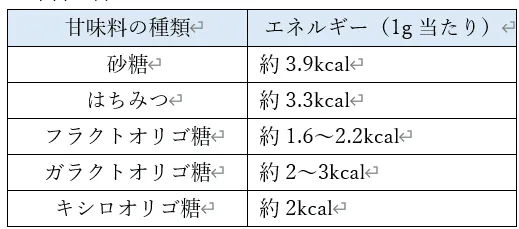
As mentioned above, it can be seen that the energy from honey and oligosaccharides is lower than that of sugar.
If you use sugar substitutes in your daily life, you will naturally reduce your energy intake.
For those who particularly want to reduce their energy intake, oligosaccharides are recommended.
Source: Independent Administrative Institution Agricultural and Livestock Industries Corporation "About Sweeteners Other Than Sugar"
Ministry of Education, Culture, Sports, Science and Technology "Japanese Food Standard Composition Table (8th Edition) Supplement 2023"
Nutritional components and health components.
Honey contains the following nutritional and health components.
Nutritional and health components contained in honey.
- Protein
- ·calcium
- ·potassium
- iron
Honey, often referred to as a 'natural complete nutritional food,' contains various nutrients and health components, including protein, calcium, potassium, and iron.
On one hand, oligosaccharides serve as food for beneficial bacteria, but they do not contain these nutrients or health components.
Therefore, for those who want to prioritize high nutritional value, honey is recommended.
Approach to Energy Replenishment
Honey is a sweetener suitable for replenishing energy after exercise, as it primarily contains fructose along with glucose, which has a high absorption rate in the body.
Oligosaccharides are easily consumed as an energy source for the body and brain, but because they are difficult to digest, they are utilized as energy gradually.
Approach to Beauty
Both honey and oligosaccharides are expected to have effects that help maintain beauty.
By consuming it, you can enjoy beneficial effects that help maintain skin health.
"If you want to aim for beauty from the inside out, why not give it a try?"
Things to be careful about when incorporating oligosaccharides into your life.
When incorporating oligosaccharides into daily life, be sure to pay attention to the following points.
Avoid consuming a large amount at once.
Oligosaccharides should be consumed with caution to avoid taking too much at once.
Because the sweetness is moderate, if you are not used to the taste, you tend to use a larger amount when using it as a substitute for sugar.
However, consuming a large amount at once can cause abdominal pain, so let's be careful.
Furthermore, although oligosaccharides have lower energy compared to sugar, if consumed in large amounts, the energy intake will naturally increase. To consume oligosaccharides more effectively, it is important to keep the amount to taste.
Choose a trustworthy product.
If you want to use oligosaccharides to support a healthy diet, please pay attention to the following points.
Points to consider when choosing oligosaccharides.
- Check whether it contains artificial sweeteners or not.
- Check whether it is a specific health food product.
- To check the price.
First, let's check whether the oligosaccharides you are currently considering purchasing contain artificial sweeteners.
Oligosaccharides, characterized by their modest sweetness, may also contain artificial sweeteners to supplement that sweetness.
For those who want to purchase products that are gentle on the body, it is recommended to choose oligosaccharides that do not contain artificial sweeteners.
In particular, those certified as Specific Health Foods (Tokubetsu Hokenyou Shokuhin) are products that have passed the review of the Consumer Affairs Agency and are recognized for their effectiveness, so please choose according to the desired effects.
It should be noted that oligosaccharides tend to be more expensive than sugar, so using them as a complete substitute may result in higher food costs.
Things to be careful about when consuming honey.
Honey, which has been used since ancient times as a food beneficial for maintaining health, has several points to be cautious about when consumed.
Follow the recommended intake amounts.
Let's refrain from consuming a large amount of honey at once.
Honey contains sugars and gluconic acid, so consuming too much of it may cause stomach pain.
Additionally, some of the fructose contained in honey is converted into glucose in the liver.
If this amount is too large, it is likely to be stored in the body as triglycerides, so we must be careful.
When incorporating it into your daily life, please aim for an amount of 1 to 2 tablespoons (20 to 40 grams) to taste.
Do not give to infants under 1 year old
To prevent food poisoning caused by botulinum bacteria, it is important to be cautious and not give honey to infants under one year old.
The botulinum bacteria present in the soil is one of the bacteria that can cause food poisoning.
Typically, harmful bacteria are eliminated by the action of intestinal bacteria in humans; however, infants under one year old have immature gut flora, which increases the risk of food poisoning caused by Clostridium botulinum.
In households with children under one year old, when incorporating honey, it is important to manage it properly to avoid accidental ingestion.
A recommended recipe for when you want to consume honey and oligosaccharides at the same time.
Honey contains oligosaccharides, so by using honey, you can intake both.
From here, I will introduce three easy honey recipes that you can make at home.
All of them can be made easily, so please give it a try. Easy honey recipes.
- Honey Banana Yogurt
- Honey and roasted soybean flour soy milk drink
- Honey vinegar drink
honey banana yogurt
First, let me introduce a honey banana yogurt that can be easily made just by plating it.
Recipe for Honey Banana Yogurt: Ingredients and Method
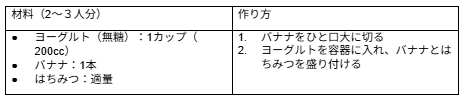
By using unsweetened yogurt, the natural sweetness of honey is enhanced.
This recipe allows you to get dietary fiber from bananas, so you can properly obtain nutrition even on busy mornings.
Honey and roasted soybean flour soy milk drink
This is an easy-to-make drink using three foods that contain oligosaccharides.
Recipe for Honey Soy Flour Soy Milk Drink: Ingredients and Method

Oligosaccharides can be consumed in large amounts at once, making them a great addition to breakfast or a recommended snack when you feel a little hungry.
Honey vinegar drink
The honey vinegar drink, with its refreshing taste, is a perfect recipe for hydration and relaxation.
Recipe for Honey Vinegar Drink: Ingredients and Instructions
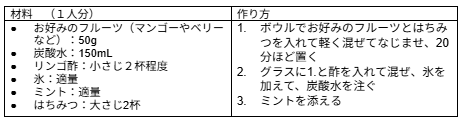
By blending the flavor of honey with fruits such as mangoes and berries, a natural sweetness and fruity aroma spread.
This is a recipe based on carbonated water and vinegar, allowing for various arrangements by adding your choice of fruits or honey.
For example, by using honey with fruit juice, you can create a vinegar drink that enhances the flavor of the fruit.
It is recommended to use honey and oligosaccharides differently according to their purposes.
Oligosaccharides are sweeteners made from ingredients such as starch, sugar beets, and soybeans, and consuming them to taste can be expected to have health maintenance effects.
Compared to honey, the taste, sweetness, nutritional components, and health benefits differ, so it is advisable to use them according to their intended purposes.
Furthermore, since honey naturally contains oligosaccharides, it is recommended for those who want to consume both!
By utilizing honey in yogurt and drinks, it can be easily incorporated into daily life, so for those who want to enjoy a refreshing everyday experience, please give honey a try.