

 Product Category
 ZenMarketについて
 海外配送
海外配送 Campaign Information
 official app
 0120-354-038




2026.08.20 column
What are the reasons for honey fermentation? An explanation of the causes, differences from crystallization, and storage precautions.
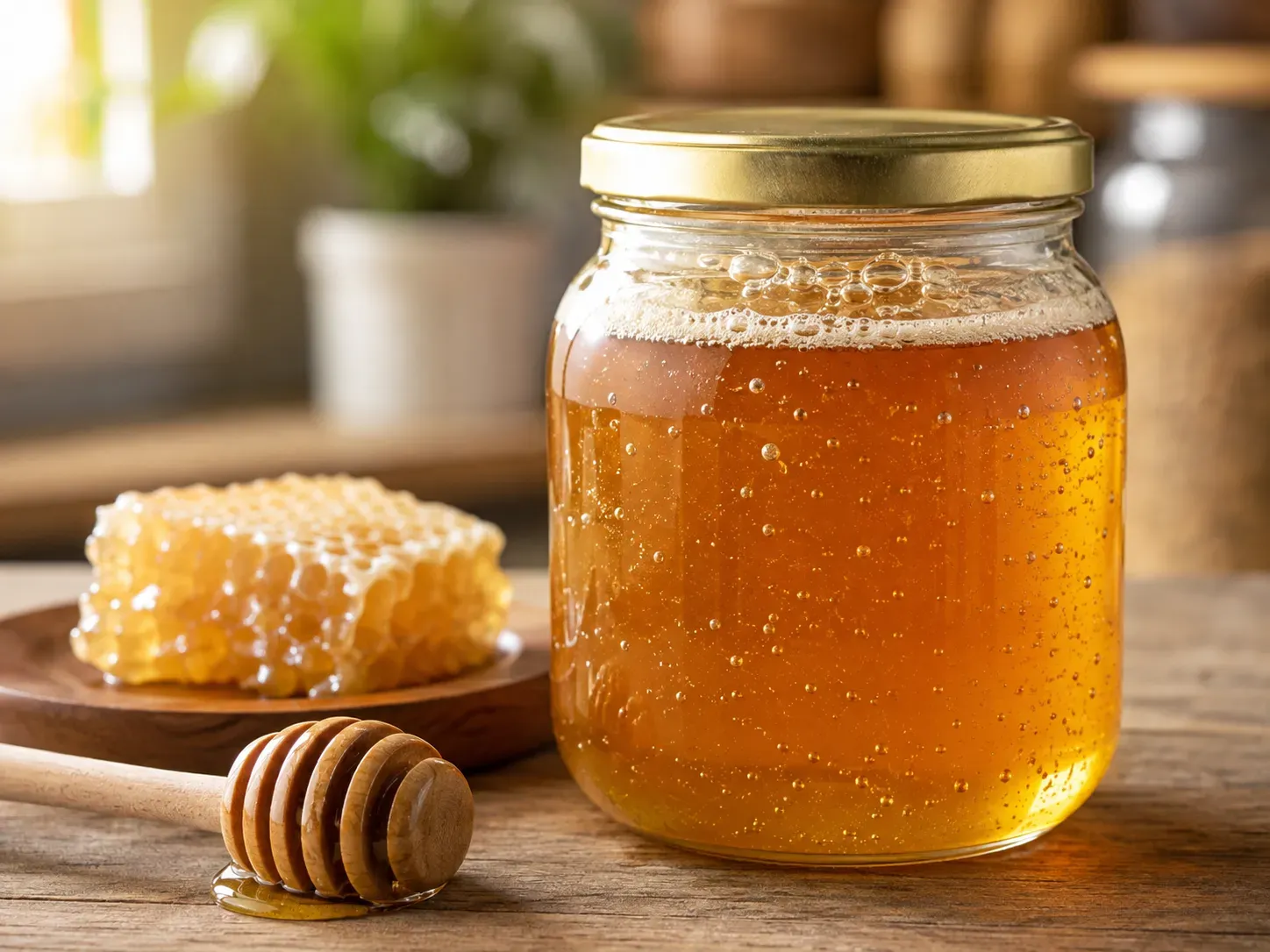
"Have you ever felt that the flavor of the honey at home has changed? You might be worried, thinking, 'There are bubbles, could it be fermenting?'"
Honey is a food that usually does not spoil easily due to its high sugar content and low moisture. However, under certain conditions, such as storage state and moisture levels, fermentation can occasionally progress.
This article provides a clear explanation of the reasons why honey ferments, the changes observed during fermentation, the differences from crystallization, and methods to prevent fermentation. In the latter part, it introduces how to handle honey when fermentation is noticed, points for deliciously storing honey, and the relationship between honey and fermentation culture.
The Basics of Honey
To understand why honey can ferment, let's first grasp some basic information about honey.
Whether honey ferments or not is related to the moisture content at the time of extraction, the presence of yeast in the honey, and the temperature and humidity during storage.
How is honey made?
Honey is made by bees that suck the nectar from flowers and bring it back to the hive.
Specifically, the following steps describe how flower nectar becomes honey.
The process of making honey.
- Honeybees gather nectar from flowers to their hive.
- The honeybee that returned to the nest transfers flower nectar to the storage bees using its mouth.
- Bees flap their wings to send air over the nectar stored in the hive, mixing it with their mouths to evaporate moisture.
- The enzymes in honeybee saliva break down the sucrose in flower nectar into glucose and fructose.
Honey produced through such procedures is collected by hand and processed in a factory to remove impurities, resulting in the honey that we enjoy.
The fermentation of honey involves sugar-tolerant yeast that bees mix in the process of making honey.
Components and Effects Contained in Honey
Honey contains not only sugars but also components such as vitamins, minerals, enzymes, and organic acids.
In the manufacturing process introduced earlier, the nectar from flowers is processed by bees, resulting in a state that contains various components derived from the flower nectar.
Honey is originally a food for bees to grow, but it also has pleasant effects for humans, making it a naturally derived health food.
Is it true that honey can ferment?
To conclude, honey can ferment.
Honey contains naturally occurring microorganisms, but due to its high sugar content and low moisture level, these microorganisms cannot be active.
However, even in such environments, these microorganisms include yeast, which triggers fermentation under certain conditions.
What are the conditions for fermentation to progress?
When the following conditions are met, honey is more likely to ferment.
Conditions for the fermentation of honey.
- The moisture content of honey exceeds 20%.
- The storage location has a high temperature.
- not sufficiently sealed
The moisture content of honey exceeds 20%.
When honey is diluted with water, it can have a high moisture content, which may lead to fermentation.
This is because microorganisms, including yeast, generally prefer environments that have moisture.
Therefore, fermentation also progresses when fruits or vegetables containing moisture are soaked in honey, not just when diluted with water.
The storage location has a high temperature.
Honey can be stored at room temperature, but the higher the storage temperature, the more likely it is to ferment and deteriorate in quality.
Since the optimal temperature for yeast activity is around 30 to 35 degrees Celsius, it is advisable to store honey in a cool, dark place away from direct sunlight, especially during the summer.
not sufficiently sealed
If the honey container is not sufficiently sealed, it may ferment by absorbing moisture from the air.
In particular, when storing honey in a humid environment, make sure not to open the container too often and to ensure it is sealed.
What happens when honey ferments?
Due to the reasons mentioned above, the following changes occur when honey ferments.
Changes that occur when honey ferments.
- Bubbles are forming on the surface of the liquid.
- A "whoosh" sound is heard when the container is opened.
- A sour smell wafts.
- When tasted, it feels like the taste of alcohol.
Bubbles are formed due to carbon dioxide.
Additionally, alcohol is produced as a byproduct of carbon dioxide, which changes the flavor.
Please avoid leaving fermented honey in high-temperature environments for long periods during the summer.
Fermentation can produce carbon dioxide, which increases the pressure inside the container and may lead to problems such as liquid leakage or container damage.
Please be careful, as the lid may blow off and could potentially lead to injuries.
In the case of fermentation, without water, soak it in newspaper or old cloth and dispose of it as combustible waste.
Difference from crystallized honey.
In addition to fermentation, another change that occurs in honey due to temperature is 'crystallization'.
Crystallization is the process by which glucose dissolved in honey forms solid particles, causing the honey to change to a white and opaque state.
When the storage temperature of honey falls below 15°C, it becomes prone to crystallization.
In the case of crystallization, glucose is simply in a solid form.
Therefore, while the perception of sweetness and mouthfeel may change, there is no production of carbon dioxide or alcohol as occurs in fermentation.
Crystallization occurs with varying likelihood depending on the type and components of honey, and it is more likely to happen when stored at temperatures around 10-15°C. While this phenomenon does not pose significant health risks, high temperatures can lead to fermentation and changes in quality, so it is advisable to store honey at room temperature.
Crystallized honey can be returned to its original state by using a water bath at 40 to 45 degrees Celsius.
Please be careful, as delicate enzymes and vitamins contained in honey can be damaged when the temperature exceeds 50°C.
Points to prevent the fermentation of honey.
To prevent honey from fermenting, it is important to avoid creating the "causes of honey fermentation" that were introduced earlier as much as possible.
Specifically, let's be aware of the following points.
Points to prevent the fermentation of honey.
- Do not add moisture to honey.
- store at room temperature
- seal the container
Moisture can be a major factor in the fermentation of honey.
Therefore, please adhere to the two key rules: "Do not dilute with water" and "If soaking vegetables or fruits, eat them promptly."
To prevent unintended moisture from mixing in, it is also important to store the container sealed.
Additionally, the storage location should avoid direct sunlight and high temperature and humidity, and it is basic to store it in a cool, dry place at room temperature.
Precautions when handling fermented honey.
If you are researching fermented honey, you may be wondering whether it is edible and how to use it.
However, honey that has fermented during storage at home varies in condition depending on the storage conditions and the extent of changes.
Especially, if there is any discomfort with the smell or foaming, it is important to decide not to use it forcefully.
Avoid use in case of unusual smell or strong foaming.
If there is a strong sour smell, an unusual odor, or strong bubbling from the honey, it is not recommended to eat it.
Not only due to changes from fermentation, but there is also a possibility that the quality has deteriorated depending on the storage conditions.
"If you feel even a little anxious or notice something clearly different, it is better to keep it to yourself for peace of mind."
There is a possibility that the flavor and condition have changed.
Fermented honey may have a different aroma and flavor compared to regular honey.
If there are bubbles, a sour smell, or an alcohol-like aroma, it is considered that the product is in a different state than when it was purchased.
To enjoy the natural aroma and sweetness of honey, please consume it in its normal state, which has not undergone fermentation.
It is generally recommended to enjoy honey in its normal state.
Honey is a food that is typically enjoyed for its aroma and sweetness in its normal state.
It is safer to enjoy fresh, unfermented honey that has been properly stored rather than using honey that has fermented and changed in flavor.
In particular, when using honey for gifts or dishes served to customers, it is advisable to avoid honey that may be in questionable condition.
The relationship between honey and fermentation culture.
From here, I will introduce the "fermentation culture using honey" found around the world, rather than how to eat honey that has fermented at home.
Honey has been used since ancient times not only as a sweetener but also as an ingredient in beverages, preserved foods, and traditional fermented foods.
However, what is introduced here are foods and drinks made through controlled methods. It does not recommend eating honey that has naturally fermented during storage at home.
Mead | A fermented drink made from honey
A representative example of a fermented beverage made with honey is 'mead'.
Mead is an alcoholic beverage that is fermented primarily from honey and water. It has been a beloved drink overseas for a long time and is sometimes called 'honey wine'.
Mead is a beverage made using the process of fermentation, but its production requires temperature control and hygiene management. Let's consider it separately from honey that has naturally fermented during storage.
Other fermented beverages using honey.
There are fermented beverages in the world that use honey as a sweetener.
In fermented beverages, the sweetness of honey is sometimes used as a fermentation ingredient. Depending on the region and culture, it may also be combined with fruits, herbs, and grains.
However, the quality of fermented beverages is influenced by the composition of ingredients, hygiene conditions, and temperature management. When producing alcoholic drinks like mead in Japanese households, one must comply with liquor tax regulations. It is important to be cautious as unlicensed production of alcoholic beverages is not permitted.
The combination of fermented foods and honey.
Honey is sometimes used in combination with fermented foods.
For example, honey can be drizzled over yogurt or added in small amounts to sauces made with miso or soy sauce.
In this case, it is basic to use fresh, unfermented honey rather than fermented honey. The natural sweetness of honey softens the acidity and saltiness of fermented foods, helping to balance the flavors.
Honey from the perspective of fermentation cultures around the world.
Fermentation is one of the food cultures that has been passed down through generations around the world.
In different regions, various ingredients such as fruits, grains, dairy products, and legumes are used for fermentation. Honey has also been utilized in beverages and dishes, taking advantage of its sweetness and aroma.
In this way, there is a deep relationship between honey and fermentation. However, foods produced under managed fermentation cultures are not the same as honey that has changed state during home storage.
When you find fermented honey, it is important to distinguish between 'fermentation as a food culture' and 'quality changes during storage.'
Storage methods for enjoying honey with peace of mind.
To enjoy honey safely, proper storage methods are important.
The basic principle is to avoid direct sunlight and store it at room temperature. Since refrigeration can lead to crystallization, it is usually better to store it in a cool, dark place.
Use it cleanly after opening.
After opening, let's be mindful to use honey cleanly.
Putting wet spoons or spoons that have other food on them into a container can cause moisture and foreign substances to mix.
When taking out honey, use a dry and clean spoon, and close the lid immediately after use.
Avoid high temperature and high humidity.
Store honey in a place that avoids high temperature and high humidity.
In the kitchen, it is important to be cautious in areas near the stove or in direct sunlight, as temperatures can easily rise.
During the summer, since room temperatures tend to rise, it is advisable to place it in a location that is as cool as possible and has minimal temperature changes.
If you are feeling anxious about your condition, do not force yourself to eat.
If you notice changes such as bubbles in the honey, a strong acidity, an unusual smell, or swelling of the container, do not force yourself to eat it.
If there are concerns about appearance or smell, it is safe to refrain from using it.
Honey can be enjoyed in its unfermented state to appreciate its original aroma and sweetness.
Summary: Let's properly store honey and enjoy it in its usual state.
Honey is a food with high sugar content and low moisture, but it can ferment depending on the moisture level, temperature, and storage conditions.
As fermentation progresses, you may notice bubbles, a sour smell, or an alcohol-like aroma. Due to the possibility of quality degradation depending on storage conditions, it is not recommended to consume it.
Furthermore, fermentation and crystallization are different phenomena. Crystallization is a natural change where the sugars contained in honey solidify and turn white, and it does not produce aromas like gases or alcohol as fermentation does.
In the world, there are fermented beverages and cultures that utilize honey, like mead. However, controlled fermented foods are not the same as honey that has naturally fermented during home storage.
Generally, it is recommended to enjoy unfermented fresh honey. To savor the natural aroma and sweetness of honey, avoid moisture and high temperature and humidity, and store it properly.
At the SUGI BEE GARDEN online shop, we offer a variety of honey products for home use and as gifts. If you are looking for honey that you can enjoy safely at your daily dining table, please take a look.
Column Supervisor

Hirayanagi Essential Mr.
Title: Doctor of Medicine (University of Tokyo) / Master of Health Science (University of Tokyo)
Affiliation: Food Medical Research Institute, Representative and Director
Brief Biography
After completing the graduate program in Physiology at the University of Tokyo, they became a visiting researcher at the University of Parma in Italy, Harvard University, and the Massachusetts Institute of Technology, and then became an associate professor in Hygiene at Nihon University School of Medicine.
So far, I have served as a part-time lecturer at Nippon Sport Science University (Public Health / Occupational Health), Sano Nihon University Junior College (Public Health), and held positions as a director in the Japan Ergonomics Society, the Japan Society for Aerospace and Environmental Medicine, and the Japan Society of Clinical Hyperbaric Oxygen and Diving Medicine, as well as a councilor in the Japan Society of Hygiene and the Japan Society for Preventive Medicine Risk Management.
Currently, I am the representative and director of Food Medicine Research Institute.
Specialized field
- Special Environmental Medicine (Space Environment Physiology, Marine Environment Physiology, Occupational Health Science)
- Research on the health effects of food ingredients based on scientific evidence.
[Media appearances]
NHK 'Try It and Understand'
TBS Television 'The Doctor's The Stamp of Approval!'
TV Asahi 'Hayashi Osamu's Now is the Time! Lecture'
CBC Television "Health Capsule! Time for Vitality"
He has also appeared on many other programs, including MBS, TV Tokyo, and BS Fuji.
Supervision and Contribution Achievements
The Power of Honey (Housewives and Life Publishing Co.)
Magical Honey (Makino Publishing)
A special ginger recipe for body alignment (Natsume Publishing)
In addition, I have been featured in magazines, newspapers, and magazines about the health benefits of food.
He has contributed and supervised over 200 articles.
[Works]
The surprising effectiveness of sunbathing in cancer prevention - the astonishing power of vitamin D (Kodansha)
"Don't Get Sick! Ginger Green Tea Health Method (Published by Sanmark, Chinese version available)"
A longevity furikake created by a medical doctor (Sanmark Publishing)
Other specialized books include "Modern Life and Health" (Shinohara Publishing) and "New Edition of Hygiene Practice" (Nanzando), among others.
He has written many books on health and wellness.
[External link]
Food Medicine Research Institute Blog: http://h-and-w.jp/column/
My Best Pro Gunma Blog: https://mbp-japan.com/gunma/food-medicine/column/