

 Product Category
 ZenMarketについて
 海外配送
海外配送 Campaign Information
 official app
 0120-354-038




2026.08.20 column
What types of flowers and plants serve as nectar sources for honey?
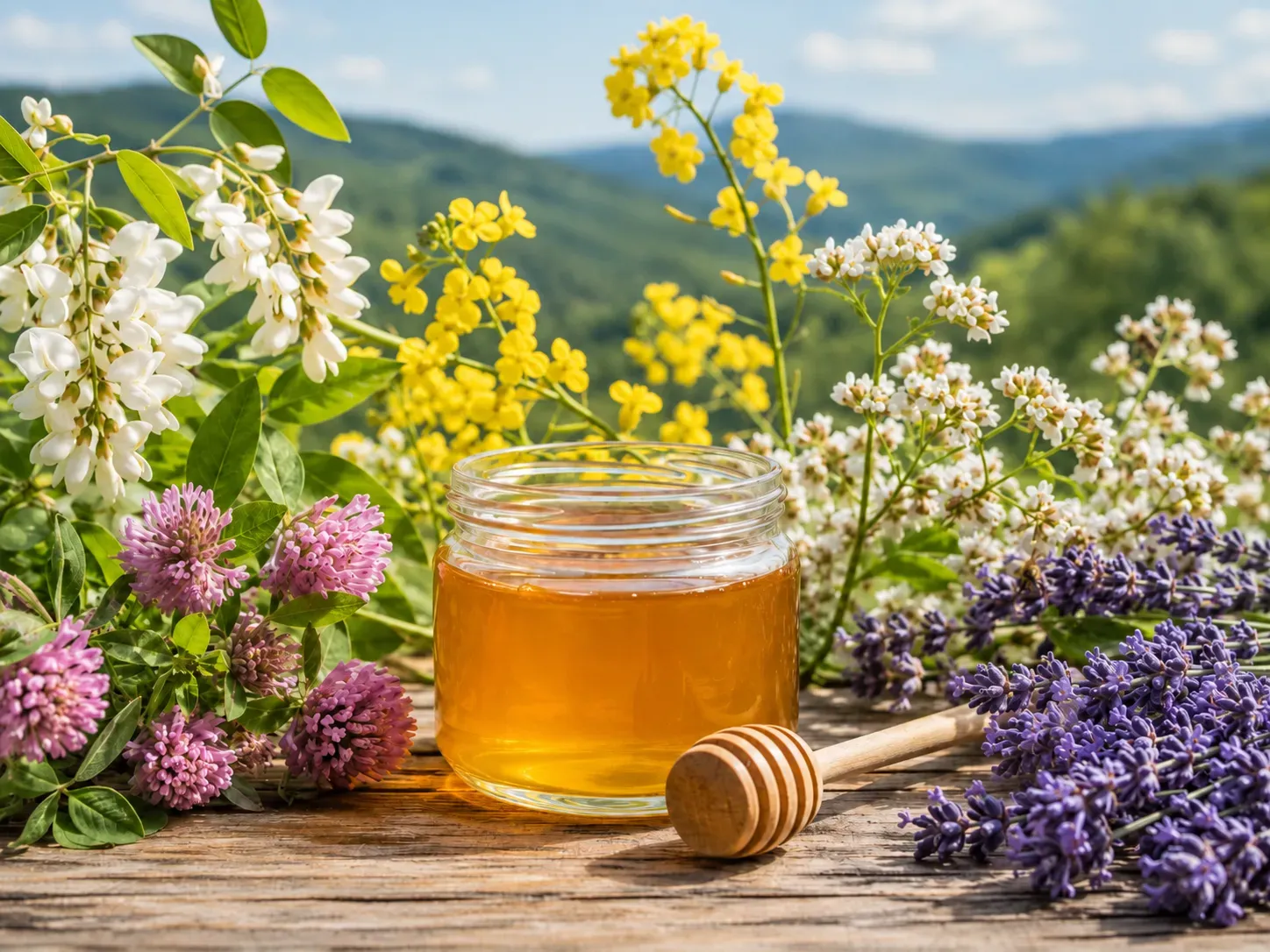
The taste, aroma, and color of honey vary completely depending on the flowers and plants that serve as its nectar source.
Acacia honey, characterized by its mild sweetness, and on the contrary, buckwheat honey, which offers a unique flavor, are truly diverse.
If you know the differences between the various types, it will be easier for you to find honey that matches your preferences.
This article explains nine major types of flowers and plants that serve as nectar sources, as well as the characteristics of the honey produced from them.
What is the difference between 'honey' and 'flower nectar'?
Honey is originally made from the nectar that bees collect from wildflowers.
Therefore, some people may think that "honey" and "flower nectar" are the same thing, but in reality, these two are completely different.
Honey and flower nectar differ primarily in the types of sugars they contain.
The sugars contained in honey are mainly monosaccharides such as glucose and fructose, while the nectar of flowers primarily consists of the disaccharide sucrose.
Honeybees temporarily store the nectar they collect in an organ called the 'honey stomach,' during which the enzymes present in the bees break down sucrose into glucose and fructose.
Therefore, the sugars contained in honey and flower nectar are different.
Another difference between the two is the 'ratio of moisture content'.
Honey contains about 20% water, while freshly collected flower nectar contains about 60-70% water.
The reason for the significant difference that has emerged up to this point lies in the habits of honeybees.
When the nectar from flowers is collected into the hive, the bees inside the hive flap their wings to create airflow, which evaporates the moisture.
This is how a thick and rich-tasting honey is created.
The process until honey is completed.
Now, let's take a closer look at the process of how flower nectar becomes honey.
The process until honey is completed.
- The worker bee sucks nectar from flowers and returns to the hive.
- Passing flower nectar by mouth to the worker bees inside the nest.
- The worker bee stores honey inside the hive and fans it with its wings to evaporate moisture.
- When the moisture in the honey decreases, cover it with Beeswax to mature.
- The honey is ready.
The honey that is produced in this way is collected by beekeepers, who filter out impurities and process it as necessary before delivering it to our tables.
types of honey
There are various types of honey, but they can be broadly classified into 'single flower honey' and 'Wild Flower Honey'.
I have organized the characteristics of each below.
single flower nectar
Single flower honey is, as the name suggests, honey that primarily comes from a specific type of flower.
Honey such as 'Acacia honey' and 'Clover honey' falls under this category.
There are some differences depending on the time of honey collection and the region, but the taste and aroma of single-flower honey are somewhat determined by the type of flower that serves as the nectar source.
Therefore, if you want to enjoy a specific flavor, it is recommended to choose single-flower honey.
Wild Flower Honey
Wild Flower Honey is honey that comes from a diverse variety of flowers as a source of nectar, in contrast to single flower honey.
The flavor and color of Wild Flower Honey vary greatly depending on the types of flowers from which bees collect nectar, and there is no fixed flavor profile.
Moreover, the types of flowers that serve as nectar sources vary by season, so even if the honey is harvested from the same beekeeping location, there will be differences in the flavor of the honey at different times.
Additionally, because it is a blend of nectar from multiple flowers, one of the characteristics of Wild Flower Honey is that it offers various flavors depending on the season. It is also recommended to try it for yourself.
Does the type of flowers and plants affect the differences in honey?
Single-flower honey varies greatly in taste and aroma depending on the type of flower that serves as the nectar source.
For example, acacia and clover honey offer a refreshing taste, while buckwheat honey, sourced from buckwheat flowers, has a unique and robust flavor reminiscent of medicinal cuisine.
Additionally, honey sourced from fragrant flowers like rosemary can be enjoyed for its rich aroma, just like the flower.
In this way, the characteristics of honey vary completely depending on the source of nectar, so please try to find one that suits your own preferences.
What flowers are the sources of nectar for honey?
What specific types of flowers serve as sources of single-flower honey?
From here, I will explain the characteristics of honey sourced from major flowers and plants.
Flowers and plants that serve as nectar sources for honey.
- Acacia (False Acacia)
- Clover
- rosemary
- Manuka
- sunflower
- orange
- lychee
- rapeseed flowers
- buckwheat
Acacia (False Acacia)
Acacia is an evergreen tree of the genus Acacia in the legume family.
However, while acacia honey is beloved in Japan, much of it is sourced from the false acacia (Robinia pseudoacacia), a deciduous tree in the legume family. This type of acacia honey is also called the 'queen of honey' and offers a refined, mild flavor.
Of course, it can be eaten as is, but it can also be mixed in as a secret ingredient in cooking or drizzled over fruits, making it suitable for various occasions.
This type can be said to be perfect for trying honey for the first time.
Clover
Clover, also known as shirotsumekusa, is a major source of honey, alongside acacia.
Honey is distributed nationwide in Japan, but Hokkaido is famous as a production area.
Clover honey is highly popular worldwide and is cherished in various countries.
It is characterized by a mild and gentle sweetness with few quirks, making it suitable for various dishes, especially pairing well with black tea.
If you mix it in place of sugar, it will add a moderate sweetness and refreshing aroma, making your usual black tea taste even better.
rosemary
Rosemary, a perennial shrub from the mint family and a representative herb, is actually also a source of honey.
Rosemary honey is characterized by its rich aroma and refined sweetness, making it an ideal choice for those who enjoy fragrant honey.
Of course, it can be mixed with black tea or herbal tea, and it can also be deliciously used as a topping on toast with butter.
Additionally, it is recommended to utilize its aromatic qualities as a deodorizer for meat and fish dishes.
Manuka
Manuka is a shrub of the Myrtaceae family, primarily native to New Zealand.
Manuka honey, sourced from the nectar of Manuka flowers, is primarily harvested in New Zealand and is known for its high rarity.
One of the major characteristics of Manuka honey is that it contains a component called 'MGO'.
MGO is known to have antibacterial properties, and by incorporating Manuka honey into your daily life, you will be able to live each day with vitality.
In terms of flavor, it has a strong character, and you can feel not only sweetness and richness but also bitterness and astringency.
If you try it as is and think, "I might not like this...", then try mixing it with yogurt or coffee.
sunflower
Sunflowers, which bloom large and colorful flowers in summer, are also known as a source of honey.
Sunflowers can be seen in Japan, but there is not much honey produced from Japanese sunflowers.
Commercially available products tend to be sourced from countries such as Bulgaria, Romania, and Myanmar.
When you take a bite of sunflower honey, a rich floral aroma spreads throughout your mouth.
Yet, the sweetness is just right, and the aftertaste is refreshing.
orange
When you hear 'orange', you might first imagine the fruit, but its flower is also a source of honey.
Honey made from orange blossom nectar offers a subtle citrus aroma and a fruity sweetness.
It goes well with yogurt and black tea, but it is also recommended to mix it with lemonade in a citrus combination.
Additionally, there is the option of using Orange Honey as an ingredient for dressings to enhance its flavor.
lychee
The lychee, a fruit tree of the Sapindaceae family and the genus Litchi, has a long history as a delicacy in China, cherished since ancient times.
Depending on the region, small yellow-green flowers bloom from February to April, which become a source of honey.
Lychee honey has a distinctive aroma, and the moment you put it in your mouth, an elegant fragrance will fill the air.
Yet, the sweetness is not overpowering, there is a moderate acidity, and the aftertaste is refreshing.
If you are thinking, 'I want to try luxurious honey,' how about trying lychee honey?
rapeseed flowers
Nanohana is a plant that produces rapeseed oil and is also known as a seasonal ingredient from winter to early spring; in fact, it is also a source of nectar for honey.
Rapeseed flower honey is a honey that allows you to enjoy an aroma reminiscent of rapeseed flowers and a rich, deep flavor.
This is recommended not only for those who like rapeseed flowers but also for those who want to enjoy rich-flavored honey.
Moreover, while it is rich, it is not overly strong in flavor, making it perfect for use as a secret ingredient in cooking.
buckwheat
Speaking of soba, it is a representative of Japanese cuisine, and there is something called soba honey, which is sourced from the nectar of its flowers.
The buckwheat honey, with its deep brown color, is visually impressive and has a very unique flavor, featuring a rich sweetness similar to brown sugar and a distinctive aroma reminiscent of medicinal herbs.
It is good to enjoy it fully on toast or pancakes, but it is also recommended to use it as a secret ingredient in stews or curries.
How can one fully enjoy the deliciousness of honey?
If you want to fully enjoy the deliciousness of honey, please eat it as it is first.
You can fully savor the natural sweetness, aroma, and richness of honey.
If you want to easily incorporate it into your daily meals, it is recommended to combine it with yogurt.
A dessert is created that combines the subtle acidity of yogurt with the sweetness and richness of honey, allowing for a variety of flavors to be enjoyed.
It's a nice point that you only need to add honey to yogurt, making it easy to prepare.
In addition to yogurt, it pairs excellently with fruits.
Especially compatible with lemon, soaking sliced lemons in honey creates a delicious 'honey lemon' that perfectly combines sweetness and acidity.
If you keep it on hand, it can serve as a little dish for snack time and also provide an energy boost when you want to work hard or do housework.
There are various types of flowers that serve as nectar sources for honey, each with distinct flavors and aroma characteristics.
Honey is divided into two types: 'single flower honey' and 'Wild Flower Honey', each differing in taste and aroma.
Additionally, single-flower honey varies in flavor depending on the source flower, with some offering a refreshing sweetness and others featuring fruity flavors.
When incorporating honey into your daily life, be sure to understand the differences between the various types and look for one that suits you.
At the SUGI BEE GARDEN online shop, we handle a wide variety of honey types and also introduce many recipes that use honey.
Column Supervisor

Hirayanagi Essential Mr.
Title: Doctor of Medicine (University of Tokyo) / Master of Health Science (University of Tokyo)
Affiliation: Food Medical Research Institute, Representative and Director
Brief Biography
After completing the graduate program in Physiology at the University of Tokyo, they became a visiting researcher at the University of Parma in Italy, Harvard University, and the Massachusetts Institute of Technology, and then became an associate professor in Hygiene at Nihon University School of Medicine.
So far, I have served as a part-time lecturer at Nippon Sport Science University (Public Health / Occupational Health), Sano Nihon University Junior College (Public Health), and held positions as a director in the Japan Ergonomics Society, the Japan Society for Aerospace and Environmental Medicine, and the Japan Society of Clinical Hyperbaric Oxygen and Diving Medicine, as well as a councilor in the Japan Society of Hygiene and the Japan Society for Preventive Medicine Risk Management.
Currently, I am the representative and director of Food Medicine Research Institute.
Specialized field
- Special Environmental Medicine (Space Environment Physiology, Marine Environment Physiology, Occupational Health Science)
- Research on the health effects of food ingredients based on scientific evidence.
[Media appearances]
NHK 'Try It and Understand'
TBS Television 'The Doctor's The Stamp of Approval!'
TV Asahi 'Hayashi Osamu's Now is the Time! Lecture'
CBC Television "Health Capsule! Time for Vitality"
He has also appeared on many other programs, including MBS, TV Tokyo, and BS Fuji.
Supervision and Contribution Achievements
The Power of Honey (Housewives and Life Publishing Co.)
Magical Honey (Makino Publishing)
A special ginger recipe for body alignment (Natsume Publishing)
In addition, I have been featured in magazines, newspapers, and magazines about the health benefits of food.
He has contributed and supervised over 200 articles.
[Works]
The surprising effectiveness of sunbathing in cancer prevention - the astonishing power of vitamin D (Kodansha)
"Don't Get Sick! Ginger Green Tea Health Method (Published by Sanmark, Chinese version available)"
A longevity furikake created by a medical doctor (Sanmark Publishing)
Other specialized books include "Modern Life and Health" (Shinohara Publishing) and "New Edition of Hygiene Practice" (Nanzando), among others.
He has written many books on health and wellness.
[External link]
Food Medicine Research Institute Blog: http://h-and-w.jp/column/
My Best Pro Gunma Blog: https://mbp-japan.com/gunma/food-medicine/column/