

 Product Category
 ZenMarketについて
 海外配送
海外配送 Campaign Information
 official app
 0120-354-038




2026.08.20 column
What are the differences between Royal Jelly and Propolis? A clear explanation of their components, characteristics, and how to choose.
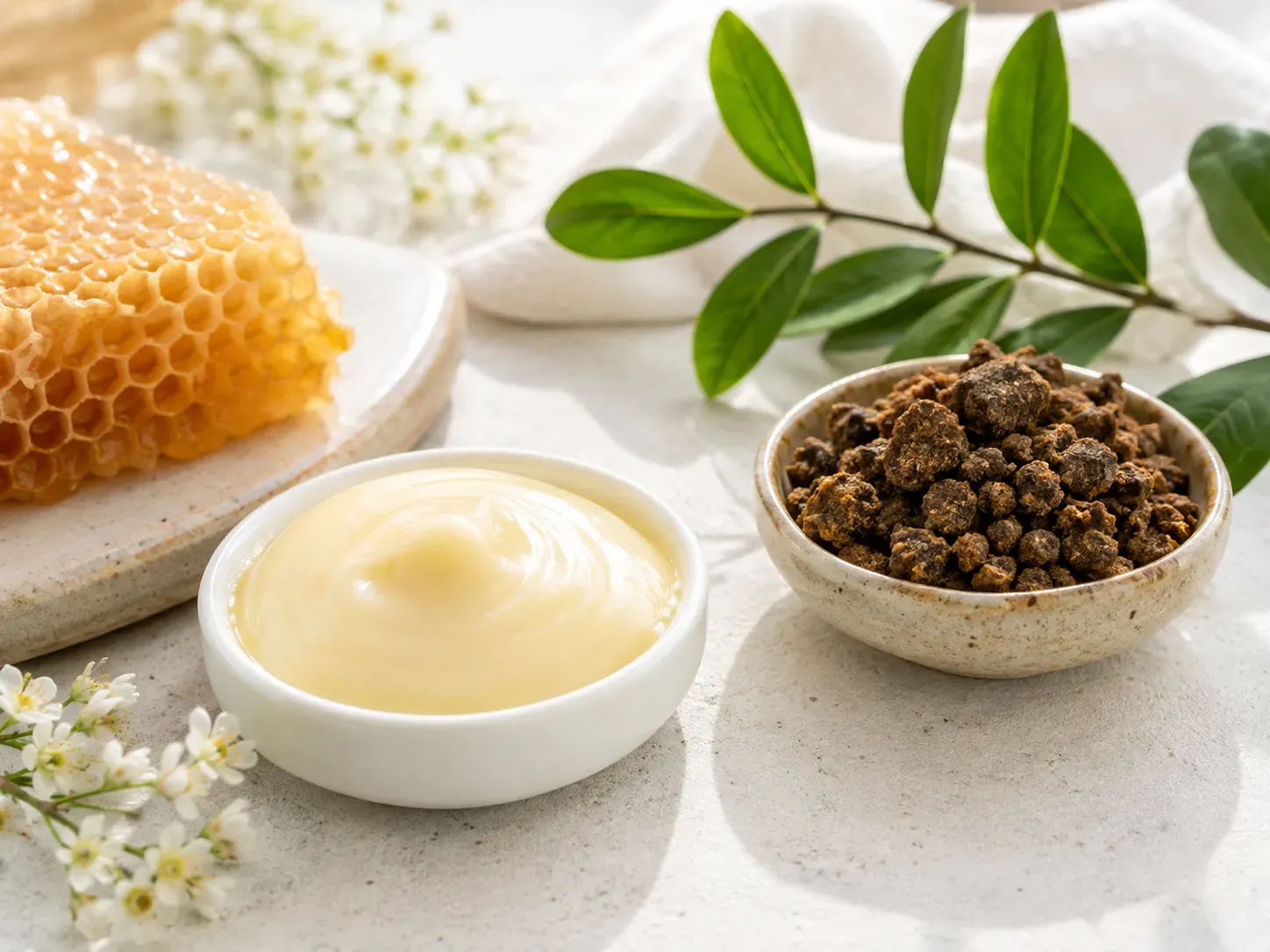
Both Royal Jelly and Propolis are natural health foods produced by bees.
However, the effects and the ingredients contained vary greatly.
This article explains the differences between Royal Jelly and Propolis.
If you are looking for health foods that suit you, please be sure to read until the end.
What is Royal Jelly?
Royal Jelly is a milky substance synthesized and secreted by worker bees, and it serves as a special food source for bee larvae and queen bees.
The Queen Bee is believed to grow larger and live longer by continuously consuming Royal Jelly throughout its life.
Royal Jelly contains over 40 types of nutrients and health components, including proteins, essential amino acids, B vitamins, and a unique component known as 10-Hydroxy-2-decenoic acid, all in a well-balanced composition.
Therefore, it is also used as a raw material for health foods.
Types of Royal Jelly
Royal Jelly, which is distributed as a health food, is mainly divided into three types.
Types of Royal Jelly
- Fresh royal jelly
- Dried Royal Jelly
- Adjusted Royal Jelly
Fresh royal jelly
Fresh Royal Jelly is simply Royal Jelly made by bees that has been filtered by human hands.
Due to the difficulty of quality management, it has the characteristic of being highly rare.
However, while Fresh Royal Jelly allows for efficient intake of its naturally contained components, its strong sour taste may be off-putting for some people.
Dried Royal Jelly
Dried Royal Jelly is made by removing moisture from Fresh Royal Jelly and processing it into a powdered form.
The tablet and capsule types of health foods that are distributed use dried Royal Jelly as an ingredient.
Unlike Fresh Royal Jelly, it has the advantage of being able to be stored for a long time and does not have a unique sour taste.
Adjusted Royal Jelly
Adjusted Royal Jelly is a product based on Fresh Royal Jelly and dried Royal Jelly, with the addition of other ingredients and additives.
There are drink types and soft capsule types, which can be easily consumed just like dried Royal Jelly.
What is Propolis?
Propolis is a substance that bees produce using materials such as plant buds and resins.
It contains antibacterial ingredients, and by applying it to the gaps in the nest, it serves to protect the nest from viruses and bacteria.
Propolis contains components such as flavonoids, vitamins, and minerals that are useful for maintaining health, and it is also referred to as a 'naturally derived antibacterial substance.'
Types of Propolis
Propolis varies in color depending on the types of plants used by bees as raw materials.
There are mainly three types of Propolis distributed as health foods: Green Propolis, Red Propolis, and Brown Propolis, each differing not only in color but also in characteristics.
Types of Propolis
- Green Propolis
- Red Propolis
- Brown Propolis
Green Propolis
Green Propolis is a type of Propolis made by bees, originating from the new shoots of the herb Baccharis dracunculifolia, which is native to Minas Gerais, Brazil.
It is called this way because it is characterized by a greenish color.
Compared to other Propolis, it contains a high amount of active ingredients known as 'cinnamic acid derivatives', including Artepillin C.
Red Propolis
Red Propolis is a type of Propolis collected from the mangrove area of northeastern Brazil.
The raw material comes from a plant called Dalbergia ecastaphyllum, which belongs to the legume family, and its red sap is the source.
It is characterized by a high content of polyphenols such as flavonoids and isoflavones.
The collection amount is less than that of Green Propolis, and since only a very small quantity is obtained annually, it is considered a highly rare Propolis.
Brown Propolis
Brown Propolis is a common type of Propolis that has raw material that is brown or dark brown, and it is widely collected around the world.
Propolis is harvested more commonly than Green Propolis or Red Propolis, as it can be found in many regions such as Europe and Asia.
Before the discovery of Green Propolis in 1988, Brown Propolis was the mainstream and had been used for people's health.
Even when referring to 'Brown Propolis', the components differ depending on the region of origin; for example, materials such as poplar, which have strong antibacterial properties, may be used.
The difference between Royal Jelly and Propolis.
So far, I have explained the characteristics and types of Royal Jelly and Propolis.
So, what specific points are different between the two?
From here, I will explain the differences from four perspectives.
The difference between Royal Jelly and Propolis.
- The purpose created by honeybees.
- contained ingredients
- Characteristics as a health food.
- Flavor and Appearance
The purpose created by honeybees.
Royal Jelly and Propolis are both substances produced by bees.
However, that purpose is significantly different.
First, Royal Jelly is produced as the sole food for the queen bee throughout her life.
The queen bee is about 2 to 3 times larger than the worker bees, lives 30 to 40 times longer, and lays approximately 1,500 to 2,000 eggs each day.
It is believed that consuming Royal Jelly, which is a nutrient-rich substance, every day brings about such longevity and physical strength.
On the other hand, Propolis is a substance that bees use to seal the gaps in their hives, so it is not food to begin with.
The purpose of Propolis is to suppress bacterial growth in a high-temperature and high-humidity nest.
The resin used as a raw material contains components with excellent antibacterial properties, which prevent the proliferation of bacteria and keep the nest in a clean state.
In this way, Royal Jelly is the "nutritional food for the queen bee," while Propolis is "material used to maintain the cleanliness of the hive," indicating that both have different original purposes and roles.
contained ingredients
Royal Jelly and Propolis have different purposes and processes of production, which results in differences in their components.
First, let's take a look at Royal Jelly.
Royal Jelly is a substance produced and secreted by worker bees, generated as a nutritional food containing the following components.
Components of Royal Jelly
| essential amino acids | Lysine, histidine, phenylalanine, leucine, isoleucine, etc. |
| amino acid | Arginine, tyrosine, alanine, glycine, proline, etc. |
| Vitamins | Vitamin B1, Vitamin B2, Vitamin B6, pantothenic acid, folic acid, etc. |
| minerals | Magnesium, phosphorus, iron, calcium, potassium, etc. |
| carbohydrates | Glucose, fructose, sucrose, oligosaccharides |
| Unique ingredients | Decenoic acid, parathyroid hormone-like peptide |
Royal Jelly contains over 40 types of nutrients and health components, including those mentioned above, to nourish the queen bee daily.
In particular, it can be said that a major feature is that all nine types of essential amino acids, which are indispensable components for human health, are included.
Next, let's take a look at the components contained in Propolis.
Components of Propolis
| Flavonoids | Krisin, naringenin, pinocembrin, etc. |
| cinnamic acid derivatives | p-coumaric acid, artepillin C |
| Caffeoylquinic acids | Chlorogenic acid, 4-Caffeoylquinic acid |
| terpenoid | Nerolidol |
| Vitamin and vitamin-like substances | Vitamin A, Vitamin E, Niacin, etc. |
| minerals | Sodium, phosphorus, calcium, etc. |
Propolis contains various components that differ depending on the place of origin and the source plants.
As can be seen from the above, the breakdown differs from the main components of Royal Jelly.
This is because Propolis is made from resin, beeswax, essential oils, and Pollen, and it serves to keep the hive clean due to its antibacterial properties.
When incorporating health foods such as Royal Jelly and Propolis, it is advisable to consider what nutrients you need and choose the appropriate ones.
Characteristics as a health food.
As mentioned above, Royal Jelly and Propolis have different components, and therefore their functions are also different.
Please see below for the functions of each.
The effects of Royal Jelly and Propolis
| Royal Jelly | Propolis |
|---|---|
| supporting youthfulness | Clear your throat |
| Supporting every day without succumbing to the cold. | Supporting a healthy everyday life |
| Spend time feeling happy and energetic | relieve discomfort during the change of seasons. |
| Improve quality of life | Support for a vibrant daily life. |
| Support for a daily life that is moist and resilient. | Support for nutrition supply during dieting. |
Royal Jelly is a nutritional food necessary for the queen bee to maintain her vitality, so when incorporated as a health food, it mainly supports daily life in terms of 'youthfulness' and 'energy'.
In contrast, Propolis is a natural barrier substance that prevents the invasion and proliferation of viruses and bacteria into the hive.
Therefore, health foods that use Propolis can be expected to provide a refreshing feeling and support for a healthy daily life.
Flavor and Appearance
Royal Jelly and Propolis differ in their flavor and appearance.
Royal Jelly causes a tingling sensation on the tongue due to acidic substances such as dezene acid.
It also has a yellowish cream-like appearance, and there is a method of consuming it directly with a spoon.
If you dislike the unique flavor, there is a way to adjust it by mixing it with honey, yogurt, or juice.
Propolis also has a stimulating effect, but this is due to the components of the plants that were used as raw materials.
The characteristic of Propolis is that it has a bitterness accompanied by a tingling sensation in the throat, and as one gets used to it, one can begin to feel the aroma of resin and sweetness deeper in the throat.
It has a dark, viscous, and sticky appearance, which is completely different from Royal Jelly.
Moreover, Propolis can be mixed with honey or yogurt, making it easy for those who are not fond of its flavor to consume it daily without difficulty.
Which should I choose, Royal Jelly or Propolis?
Royal Jelly and Propolis are found to differ in many ways, aside from the commonality of being health foods produced by bees.
Therefore, it is advisable to first think about "what kind of effects you want to achieve" and then choose something that fits that purpose.
Below, I have summarized the characteristics of those who would benefit from Royal Jelly and Propolis, so please refer to it.
Recommended for each: Royal Jelly and Propolis.
| Royal Jelly | Propolis |
|---|---|
| I want to remain youthful forever. | I want a refreshing sensation in my throat. |
| I want to welcome a refreshing morning. | I want to live a vibrant daily life. |
| I want to lead a lively daily life. | I want to be conscious of maintaining my health every day. |
Additionally, both Royal Jelly and Propolis are available in various products, such as drink types and tablet types.
Choose items that are easy for you to consume and incorporate them into your daily routine for a healthier life.
Royal Jelly and Propolis differ in their nutritional components and effects.
Royal Jelly is produced by bees to raise the queen bee, while Propolis is used to prevent viruses and bacteria from entering the hive.
Therefore, the two differ in the components they contain and their effects as health foods.
Choose health foods that match the effects you are looking for.
SUGI BEE GARDEN handles both Royal Jelly and Propolis.
In addition to drink types and tablet types, there are also Manuka Honey products containing Royal Jelly and Propolis, so if you are looking for health foods, please visit our online store.
Column Supervisor

Hirayanagi Essential Mr.
Title: Doctor of Medicine (University of Tokyo) / Master of Health Science (University of Tokyo)
Affiliation: Food Medical Research Institute, Representative and Director
Brief Biography
After completing the graduate program in Physiology at the University of Tokyo, they became a visiting researcher at the University of Parma in Italy, Harvard University, and the Massachusetts Institute of Technology, and then became an associate professor in Hygiene at Nihon University School of Medicine.
So far, I have served as a part-time lecturer at Nippon Sport Science University (Public Health / Occupational Health), Sano Nihon University Junior College (Public Health), and held positions as a director in the Japan Ergonomics Society, the Japan Society for Aerospace and Environmental Medicine, and the Japan Society of Clinical Hyperbaric Oxygen and Diving Medicine, as well as a councilor in the Japan Society of Hygiene and the Japan Society for Preventive Medicine Risk Management.
Currently, I am the representative and director of Food Medicine Research Institute.
Specialized field
- Special Environmental Medicine (Space Environment Physiology, Marine Environment Physiology, Occupational Health Science)
- Research on the health effects of food ingredients based on scientific evidence.
[Media appearances]
NHK 'Try It and Understand'
TBS Television 'The Doctor's The Stamp of Approval!'
TV Asahi 'Hayashi Osamu's Now is the Time! Lecture'
CBC Television "Health Capsule! Time for Vitality"
He has also appeared on many other programs, including MBS, TV Tokyo, and BS Fuji.
Supervision and Contribution Achievements
The Power of Honey (Housewives and Life Publishing Co.)
Magical Honey (Makino Publishing)
A special ginger recipe for body alignment (Natsume Publishing)
In addition, I have been featured in magazines, newspapers, and magazines about the health benefits of food.
He has contributed and supervised over 200 articles.
[Works]
The surprising effectiveness of sunbathing in cancer prevention - the astonishing power of vitamin D (Kodansha)
"Don't Get Sick! Ginger Green Tea Health Method (Published by Sanmark, Chinese version available)"
A longevity furikake created by a medical doctor (Sanmark Publishing)
Other specialized books include "Modern Life and Health" (Shinohara Publishing) and "New Edition of Hygiene Practice" (Nanzando), among others.
He has written many books on health and wellness.
[External link]
Food Medicine Research Institute Blog: http://h-and-w.jp/column/
My Best Pro Gunma Blog: https://mbp-japan.com/gunma/food-medicine/column/